
 Menu
Morayshire, Scotland
 Morayshire is a maritime county on the south coast of the Moray Firth. The county can be divided into three broad areas. The Laich o' Moray is the traditional name for the rich agricultural coastal plain, stretching east to west from Fochabers to Brodie and including the towns of Elgin, Forres, Lossiemouth, Burghead, Hopeman, and Lhanbryde. The Braes o' Moray is the terraced upland country that rises directly out of the coastal plain, forming the upper catchment area of the River Lossie and River Findhorn. Finally, the valley of the River Spey (aka Strathspey or Speyside) runs along the east of the county. This is renowned fishing country which includes the historic town of Grantown-on-Spey, founded in 1765 as a planned settlement.
Portrait of Morayshire
Primary Name(s): Morayshire
Place Type: Historic County
Lat, Long: 57.548063,-3.489804
Grid Reference: NJ 1093 5186
Devolved Legislature: Scottish Parliament
GBPN ID: GBPN305801
GGA Code: C01000059
 GBPN URL: https://gazetteer.org.uk/place/Morayshire
 Wikidata: https://www.wikidata.org/wiki/Q1247435
 Wikishire: https://wikishire.co.uk/wiki/Morayshire
The coastal plain of the Laich o' Moray stretches across the entire north of the county. Along the coast of the Moray Firth, the shores are mostly low and sandy. It is a fishing and farming coast, the Firth rich with haddock and cod.
The main town, Elgin, lies inland a way. The historic town centre is on the south bank of the Lossie. Elgin Cathedral was established in 1224, though now stands as a ruin. Dr Gray's Hospital was built in 1819. The building, still a working hospital, is imposing with its columns and dome and standing at the head of fine gardens.
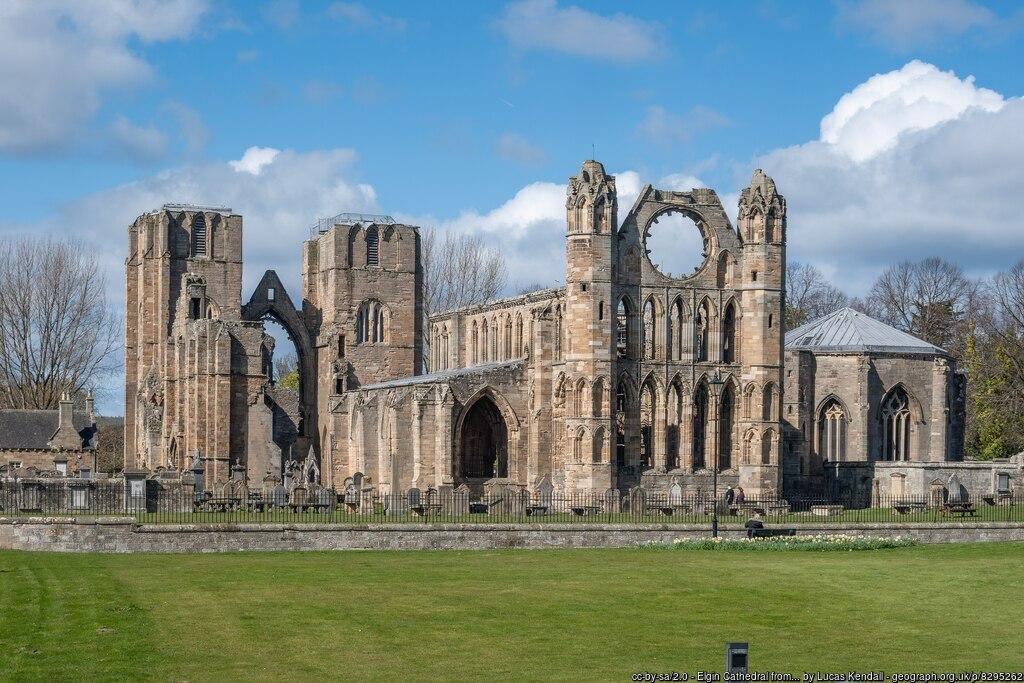
Elgin Cathedral
Downstream from Elgin, Lossiemouth is a fishing village best known for its RAF base. Pluscarden Abbey is a Benedictine monastery in the glen of the Black Burn, six miles south-west of Elgin. It was founded in 1230 by Alexander II for the Valliscaulian Order.
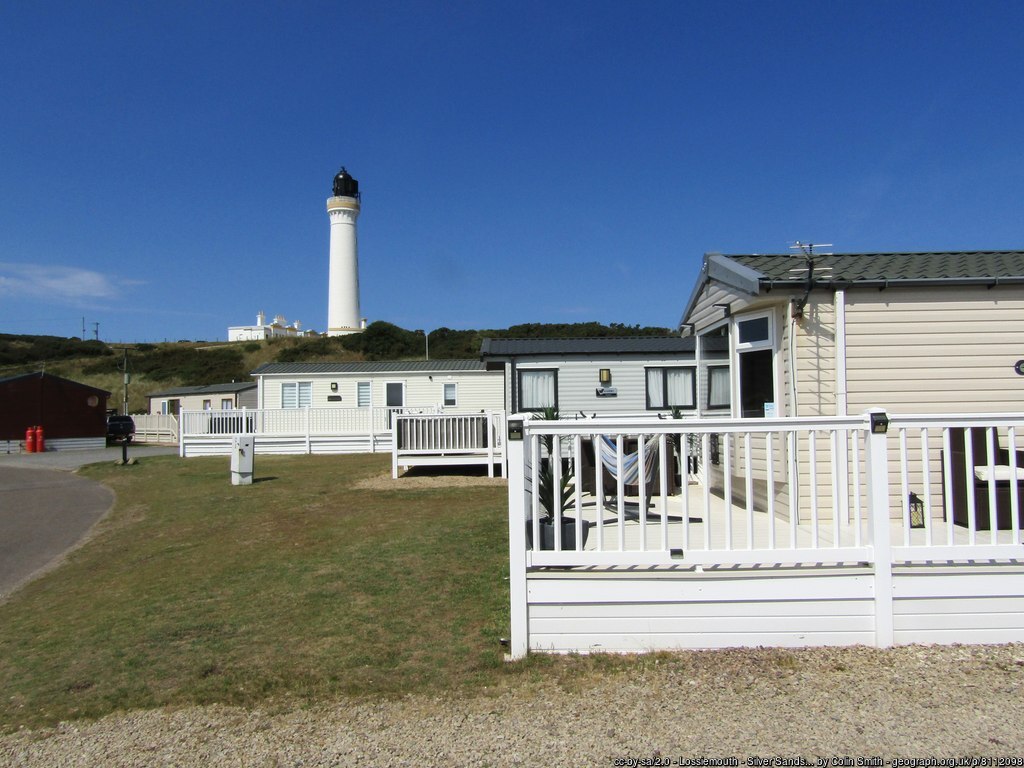
Covesea Lighthouse, Lossiemouth
The main road from Aberdeen to Inverness runs through this coastward strip and here are the main villages. On 11th January each year in the coastal town of Burghhead takes place the fire festival known as the Burning of the Clavie. Above the impressive Findhorn Bay is a magnet for Shakespeareans: the town of Forres where the Bard placed Duncan's royal palace. In the town stands Sueno's Stone, an enormous carved stone, probably created by Picts to commemorate a battle against Norse invaders. The 16th-century Brodie Castle lies near the town, as does Kinloss Abbey, a ruined Cistercian abbey founded in 1150 by King David I.
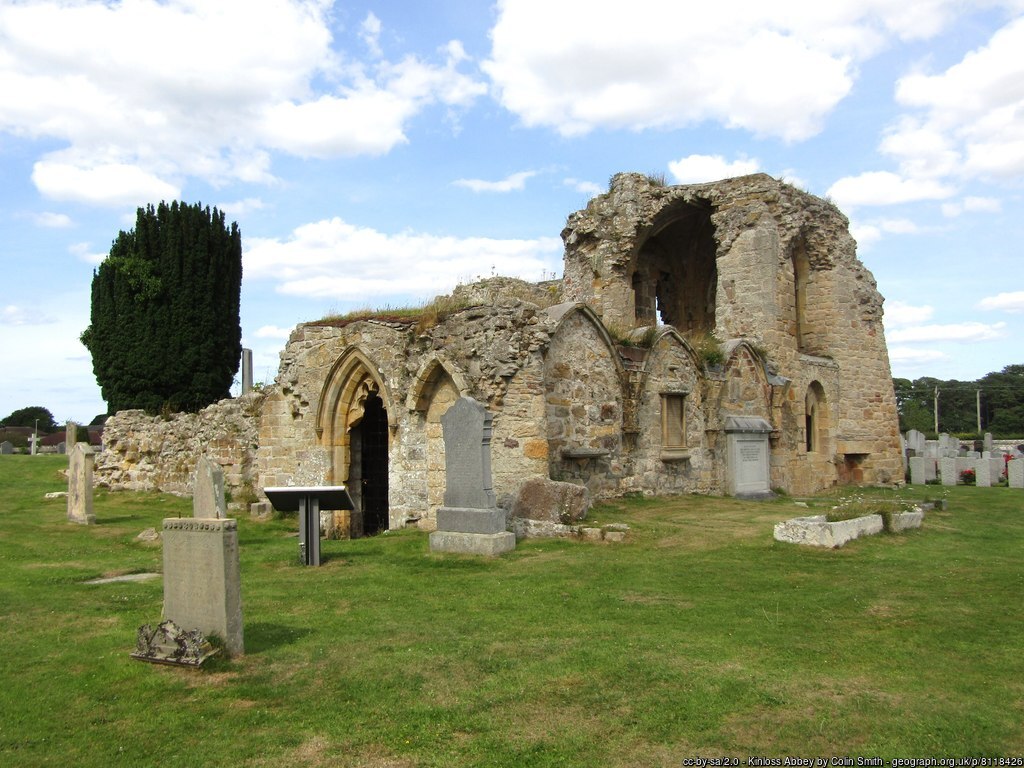
Kinloss Abbey
The southern portion of Morayshire is a contrast. It lies in the hills. A large portion at least on the lower slopes is covered by forest. The eastern edge of the county is formed by the Spey valley. The hilly area to the west of this is traditionally known as the Braes o' Moray, the rivers Lossie and Findhorn flowing through it.
The Spey and the Findhorn are rich with salmon, and the lochs with trout. Speyside in particular is renowned fishing country. Forestry is the industry of the hills, though a good income is made too from fishing and deer-stalking.
In its far south, Morayshire follows the Spey to Grantown on Spey, above which the serious mountains begin, in Inverness-shire. The town was founded in 1765 as a planned settlement and originally called simply Grantown after Sir James Grant.
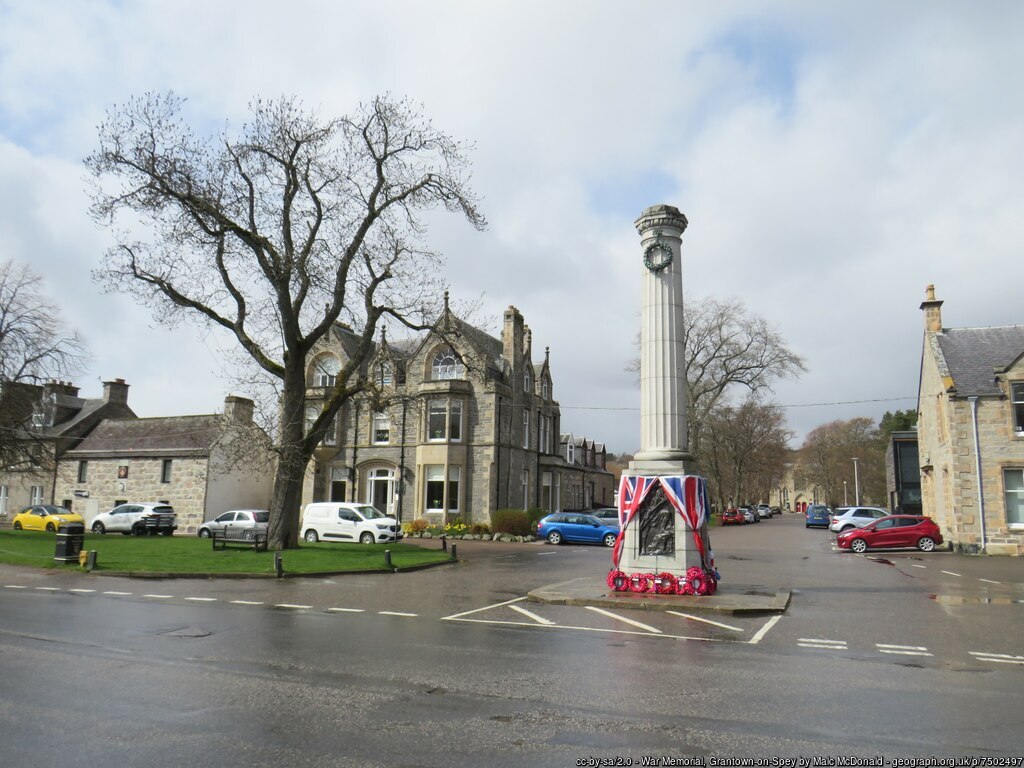
Grantown-on-Spey
Following the unification of the lands of the Picts and the Scots in the 9th century, Moray emerged as one of the seven traditional provinces of ancient Scotland. This province was much wider than the modern county. It lay to the north of the Kingdom of Alba, sometimes functioning as a vassal of the Scottish crown, and at other times operating as a separate kingdom.
Moray was finally absorbed into the Kingdom of Scotland during the 12th century. To secure the Scottish crown's authority, the old earldom of Moray was broadly split into the three shires of Elginshire, Nairnshire, and the mainland parts of Inverness-shire - each shire being administered by a sheriff. The shire of Elgin, or Elginshire, was seen as the core of the old territory of Moray and so was informally called Moray or Morayshire. Elgin was chosen as the site of the episcopal see of Moray in 1224, paving the way for the construction of the magnificent Elgin Cathedral.
Over time, Scotland's shires became more significant than the old provinces, with more administrative functions being given to the sheriffs. Commissioners of Supply were established for each shire in 1667. The flag of Morayshire was first raised on 28th October 2023 at Elgin Town Hall.
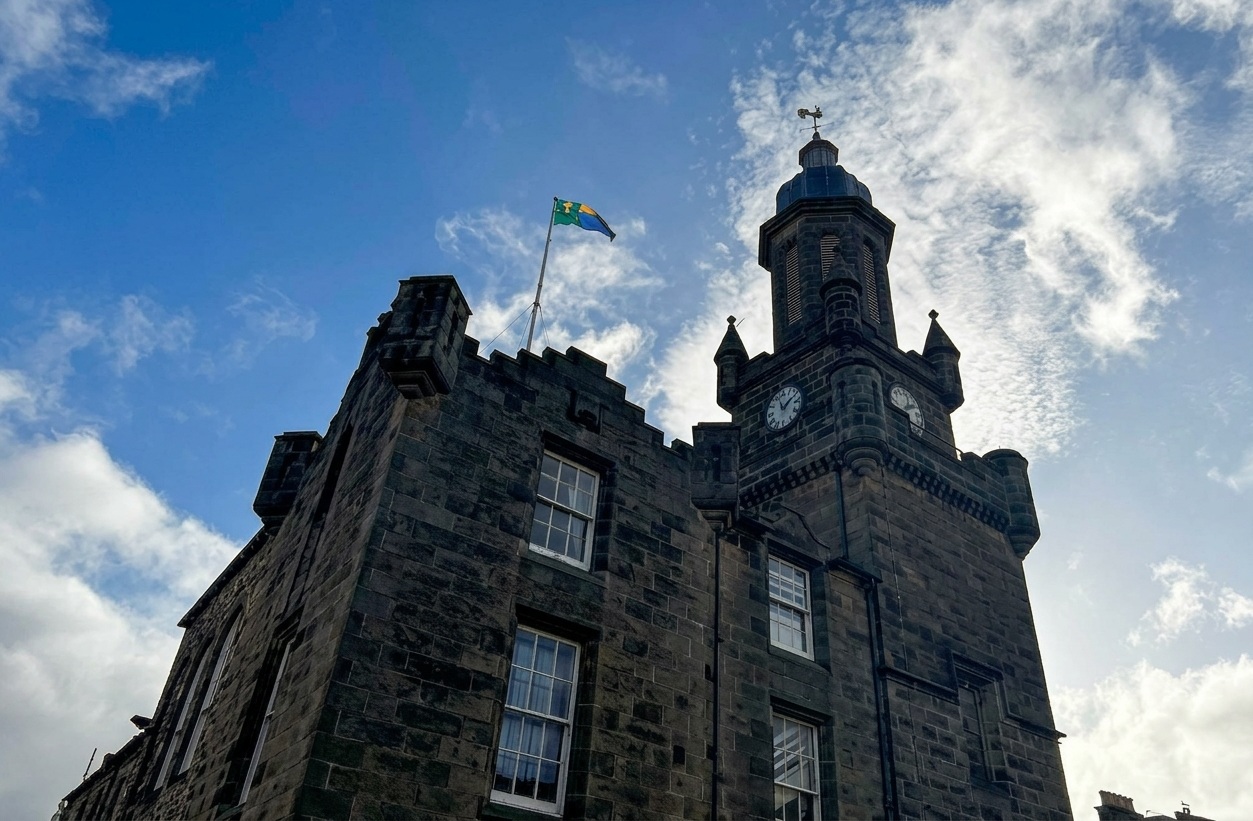
The Morayshire flag flies above Forres Tolbooth